
Libby Jenke
Quantitative UX Researcher, Meta
I am a quantitative methodologist specializing in causal inference and experimental methods. I use eye tracking to obtain direct measures of decision processes, information accrual, and attention, and study questions of voter behavior with an emphasis on affective polarization. I am currently a Quantitative UX Researcher at Meta. Previously, I was tenured at the University of Houston, and held visiting positions at the University of Pennsylvania and Harvard University, where I am a Faculty Affiliate of the Institute for Quantitative Social Science.
Research Areas
Affective Polarization +
How partisans' feelings toward their own party and the opposing party diverge, what drives that gap, and its consequences for democratic norms and misinformation belief.
Voter Behavior +
How citizens form political preferences and make voting decisions, including the interplay between policy positions and partisan identity.
Eye Tracking Methodology +
Using eye tracking to obtain direct measures of decision processes, information acquisition, and attention during political choice.
Causal Inference +
Methods for credible causal identification in observational and experimental political science research, including indirect manipulations and excludability.
Conjoint and Survey Experiments +
Design and analysis of conjoint experiments, including attention, measurement error, and heterogeneous treatment effects.
Featured Publications
Odd attribute combinations in conjoint tables don't meaningfully affect respondents' attention or choices.
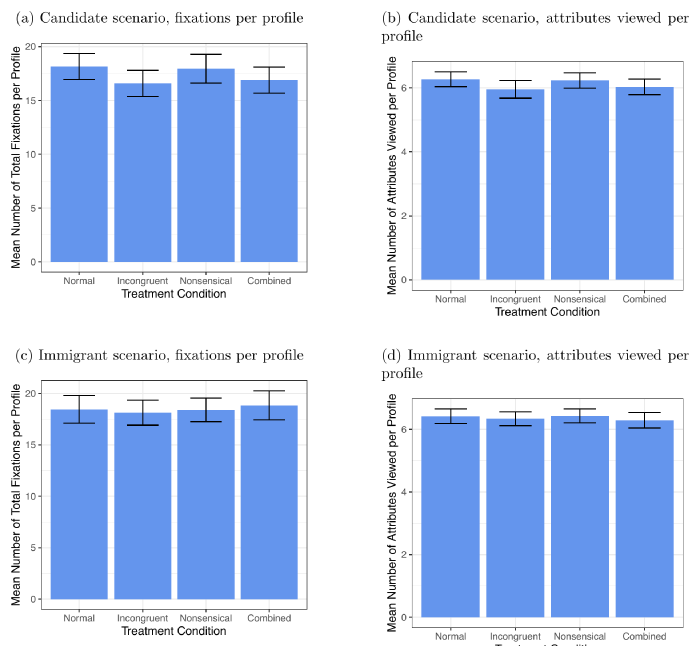
Odd Profiles in Conjoint Experimental Designs: Effects on Survey-Taking Attention and Behavior
Political Analysis, 33(4): 315–338
A practical guide to what eye tracking measures and how political scientists can use it.

Attention and Political Choice: A Foundation for Eye Tracking in Political Science
Political Analysis, 33(4): 298–314
As conjoint tables grow more complex, respondents selectively adjust their attention while their choices stay remarkably stable.

Using Eye-Tracking to Understand Decision-Making in Conjoint Experiments
Political Analysis, 29: 75–101

Prediction and Cumulative Knowledge in the Social Sciences
Cambridge University Press
Rising affective polarization increases belief in misinformation that favors your own party — and decreases belief in misinformation that favors the other side.
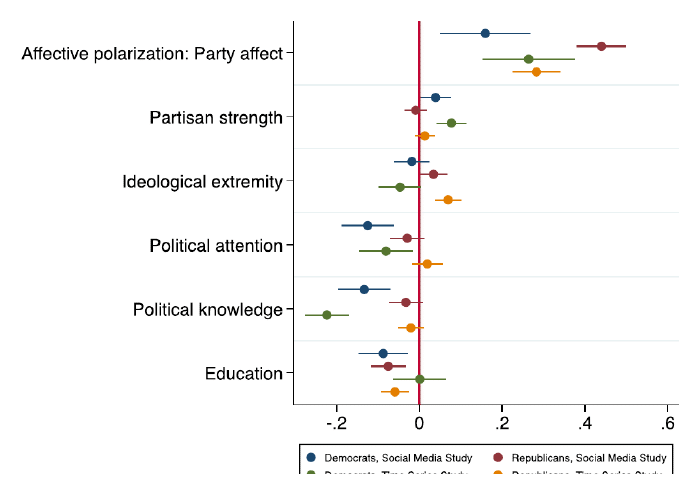
Affective Polarization and Misinformation Belief
Political Behavior, 46: 825–884
Even repeated treatments across three survey waves fail to shift affective polarization, suggesting the null effects common in this literature may reflect measurement choices, not weak treatments.
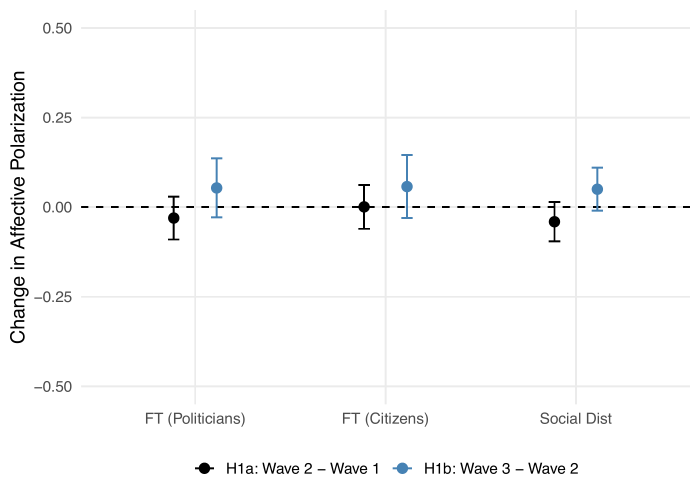
Beyond Single-Shot Designs: Repeated Treatments, Affective Polarization, and Democratic Norms
Journal of Experimental Political Science, 1–14